
Slow the rate at which wildfire spreads and protect your home!
Living in the California foothills, you are annually at risk for wildfires. During drought years, the risk of fire is even greater and the fire season is even longer. Fire prevention is the responsibility of the landowner, and is required by state law!
Fuel breaks and defensible space slow the rate at which fire spreads, and are the first steps to securing your home and valuables.
How to Create Fuel Breaks

Fuel breaks are a space or area where flammable materials, termed “fuels”, have been removed.Remove all brush, weeds, flammable vegetation, woody materials, propane tanks or other direct sources of flammable materials, etc. 30 -100 feet from all structures
- All shrubs and/or groups of shrubs should be at least 10 feet apart.
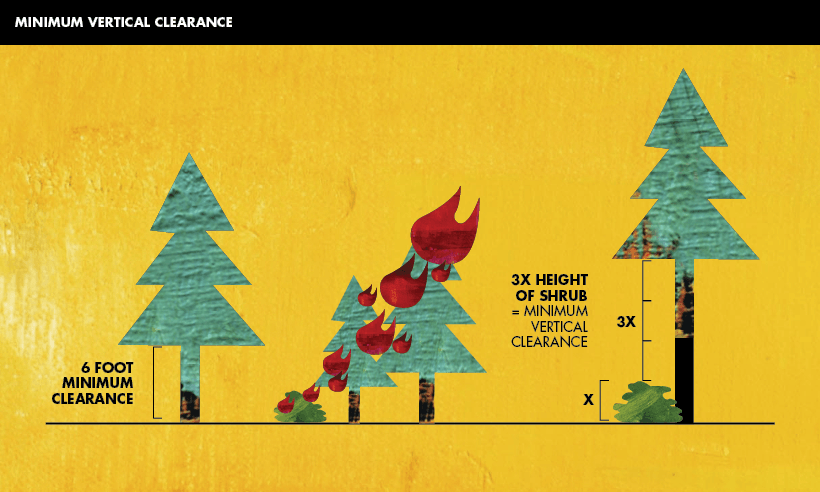
- Reduce the height of shrubs and remove lower branches to reduce the “ladder” effect.
- Prune lower branches of trees up to 10 feet. (Leave at least 1/3 of live tree crown)
- Clear roof, gutters, and decks of leaves, needles or other debris
- Remove any portion of a tree that comes within 10 feet of a chimney vent or stovepipe outlet
- Consider planting fire and drought resistant vegetation around first 10 feet of structures
- Keep piles of firewood, building materials, fuel cans, and other flammable materials away from periphery of your home
- Maintain these fuel breaks!
How to Create Defensible Space

- Remove fuels such as dead trees or flammable shrubs
- Reduce fuels by pruning dead limbs from shrubs, removing low tree branches and mowing/grazing grass areas
- Replace fuels such as dense, flammable shrubs (or invasives!) with native drought tolerant plants that remain green even with little to no irrigation
Check out the HOMEOWNERS CHECKLIST to make your home fire safe!
Livestock, such as goats, can be a useful tool if grazed strategically to reduce your fuel load while being cost efficient and environmentally friendly.
Using equipment – including masticators, dozers, chippers and mowers – quickly and effectively reduces fuels. However, heavy equipment can be rather expensive, costing over $1000 per acre on average. Soil erosion and compaction can be a concern involved with large equipment, but there are best management practices and variation among types of equipment to minimize negative impacts. The key benefit to using heavy equipment is that it can quickly diminish woody biomass of all sizes, depending on the scale of the machine being used. Here is a list of local vegetation management professionals in the Placer / Nevada counties region.
Erosion Potential – When creating defensible space and fuel breaks, be mindful of other natural resources such as soil and water. Removing vegetation can potentially cause erosion, which can lead to a whole host of problems both on and off your property. Learn how to prevent soil erosion using Best Management Practices (BMPs).