
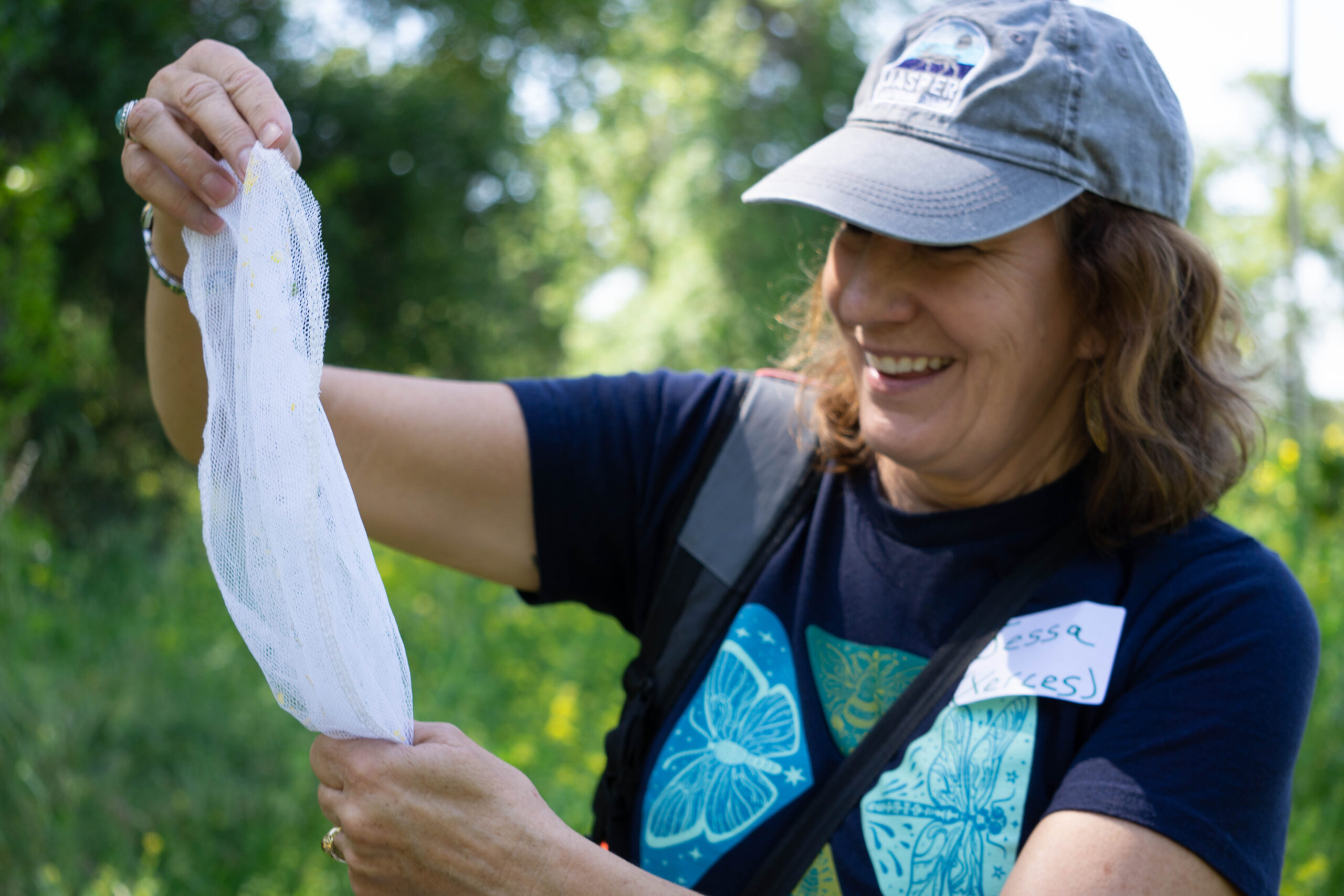
 Jessa Kay Cruz, Senior Pollinator Conservation Specialist with the Xerces Society for Invertebrate Conservation, excited to have netted a native insect.
On a picture-perfect Thursday in the Sierra Nevada foothills, May 8, 2025, more than 25 farmers, conservationists, and pollinator enthusiasts gathered at Side Hill Citrus Farm in Lincoln for a field day dedicated to the role of pollinators in agriculture and how to support them through habitat creation.
The event, hosted by Placer Resource Conservation District in collaboration with Jessa Kay Cruz, Senior Pollinator Conservation Specialist with The Xerces Society for Invertebrate Conservation, brought together hands-on learning, science-based guidance, and some good old-fashioned fun.
We kicked things off with a presentation on the “why” and “how” of establishing native pollinator habitat—a critical part of sustaining both ecological resilience and productive agriculture. Topics included plant selection, bloom succession, irrigation, site prep, and maintenance—plus how landowners can get support to do this work on their farms, including the Xerces Habitat Kits and through the Pollinator Habitat Program (supported by the Wildlife Conservation Board), which provides financial and technical assistance to ag producers.
Afterward, the group moved into the orchard for a hands-on pollinator walk. Participants played Pollinator Bingo, a fun and educational way to learn how to recognize key native plants and the insects they attract. We caught and released pollinators in the field, identifying a range of bees up close.
More than the familiar European honeybee, many attendees were surprised to learn that California is home to more than 1,600 species of native bees, “Some of them look like flies,” Jessa noted, “but they’re incredibly effective pollinators.” These bees play a critical role not only in agricultural crops like melons, berries, and tree fruit, but also in the reproduction of native wildflowers and ecosystem health overall.
Throughout the day, a few key themes emerged:
- Native pollinators are vital and often overlooked.
- Habitat creation is both feasible and deeply rewarding.
- Every farm, no matter the size, has opportunities to support biodiversity.
The field day was not only informative—it sparked ideas, questions, and a growing sense of stewardship among participants.
If you’d like to learn more about how to integrate pollinator habitat within your setting, please contact the Placer RCD staff below:
-
Andrew Justus-Fritz
Conservation Project Manager
-
Brian Pimentel
Agriculture Program Manager
-
Liana Vitousek
Education & Outreach Coordinator


